The Battle of Plassey, fought on June 23, 1757, stands as a pivotal event in Indian history, marking the commencement of British colonial dominance in the subcontinent. This engagement, though often characterized as a mere skirmish, had profound and far-reaching consequences that reshaped the political and economic landscape of India.
Background
In the mid-18th century, the British East India Company had established a formidable presence in Bengal, a region renowned for its wealth and strategic significance. The Nawab of Bengal, Siraj-ud-Daulah, ascended to power in 1756, inheriting a realm fraught with internal dissent and external threats. His reign was marked by efforts to consolidate power and curb the influence of European trading entities, particularly the British.
The Nawab’s actions, including the attack on the British settlement at Calcutta, escalated tensions, leading to the formation of a clandestine alliance between the British East India Company and several disaffected factions within Bengal. Key conspirators included Mir Jafar, the Nawab’s paymaster, and influential merchants like the Jagat Seths. This coalition sought to depose Siraj-ud-Daulah and install a more pliable ruler.
The Battle
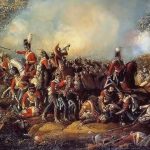
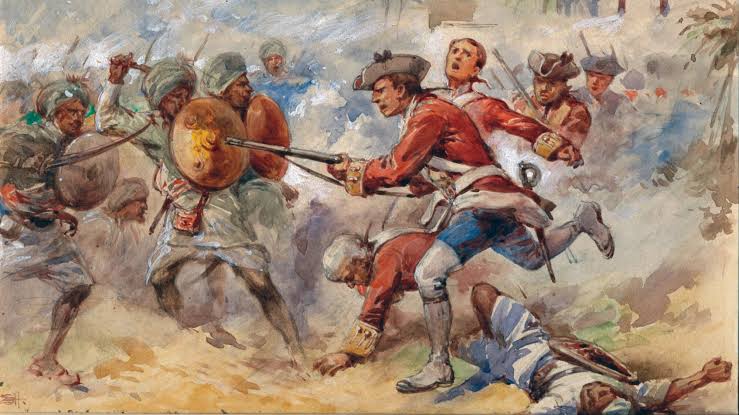
On the day of the battle, the Nawab’s forces, numbering approximately 50,000, faced a significantly smaller British contingent of around 3,200 men, including 900 Europeans and 2,100 sepoys. The engagement took place in a mango orchard near the village of Plassey, situated on the banks of the Hooghly River.
The battle was characterized by minimal direct combat. The Nawab’s artillery suffered due to inadequate protection from the monsoon rains, rendering them largely ineffective. Crucially, a substantial portion of the Nawab’s army, influenced by the conspirators, refrained from engaging, leading to a disorganized retreat. The British forces reported minimal casualties, with only 22 sepoys killed and 50 wounded.
Aftermath and Significance
The aftermath of the battle saw the capture and subsequent execution of Siraj-ud-Daulah, who was betrayed by his own officers. Mir Jafar was installed as the new Nawab, effectively becoming a puppet ruler under British influence. This victory enabled the British East India Company to consolidate its control over Bengal, leading to the establishment of British hegemony in India.
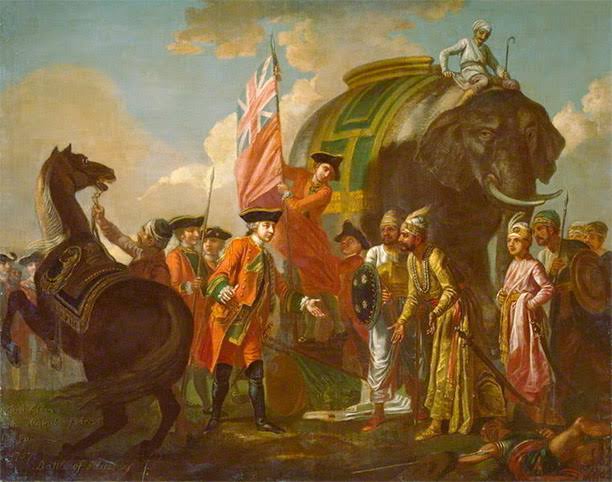
The Battle of Plassey is often cited as a turning point in Indian history, symbolizing the beginning of British colonial rule. However, it is essential to recognize that the battle was not merely a military confrontation but a culmination of political machinations, economic interests, and strategic alliances. The role of the conspirators, who prioritized personal gain over national interest, underscores the complex interplay of factors that facilitated the British ascendancy.
Lesser-Known Aspects of the Battle of Plassey and Its Aftermath
- The Role of Betrayal, Internal Dissent, and the Nawab’s Officers: While the military tactics and external forces are often the focus, less attention is given to the internal betrayal within Siraj-ud-Daulah’s ranks. The Nawab’s forces were weakened not just by the British but also by conspirators like Mir Jafar, whose personal ambitions led him to secretly align with the British. Other officers, including Mir Jafar’s son Mir Miran, had political motivations that led to their lack of commitment during the battle. Some were promised high positions and power in the new British-controlled administration. This internal division was crucial in the Nawab’s defeat.
- The Economic Impact of Plassey on Bengal’s Wealth: Beyond the political outcomes, the economic consequences of the Battle of Plassey were far-reaching. Bengal, one of the wealthiest regions in India, came under British control after the battle, giving the British East India Company access to substantial revenue. This control over Bengal’s resources fueled further British expansion in India and played a central role in financing the colonial venture. The economic changes in Bengal post-Plassey are often overlooked but were instrumental in shaping British India’s future.
- A Quiet Influence of the Marathas: While the Marathas were not directly involved in the battle, their growing power in Eastern India indirectly affected the conflict. The Marathas, who were expanding in Bengal and other regions at the time, represented a significant threat to both the British and the Nawab. Their absence from the conflict allowed the British to secure their position in Bengal without facing a major challenge from this powerful force. The geopolitical context of the Marathas provides a deeper understanding of the battle’s significance.
Conclusion
The Battle of Plassey, though a relatively small engagement in terms of direct conflict, had profound implications for the course of Indian history. It serves as a reminder that history is shaped not only by the scale of battles but also by the intricate political dynamics and economic forces at play. The victory highlighted the strategic importance of alliances and betrayals, which often define the outcome of conflicts. The British, through a combination of military tactics and political manipulation, were able to set the stage for their long-term dominance in India. The battle also underscores the complex, multi-layered nature of colonial expansion, where military might often worked in tandem with local power struggles, making it a key event in the broader narrative of India’s colonial history.