When the Revolt of 1857 began across India, many local leaders took up arms against the British. In the region of Bihar, the main command was taken up not by a young rebel, but by an eighty-year-old local landlord. This was Babu Veer Kunwar Singh, the influential zamindar of Jagdishpur and a critical figure in India’s First War of Independence.
Early Life and Ancestry
Babu Kunwar Singh was born on 13 November 1777 in Jagdishpur, a erstwhile zamindari estate in the present-day Bhojpur district of Bihar. He belonged to the Ujjainiya Rajput clan, a respected lineage that traced its ancestry to the Parmar rulers of Malwa. His father, Raja Sahabzada Singh, was the chief of Jagdishpur, and his mother was Panchratan Kunwar Devi.
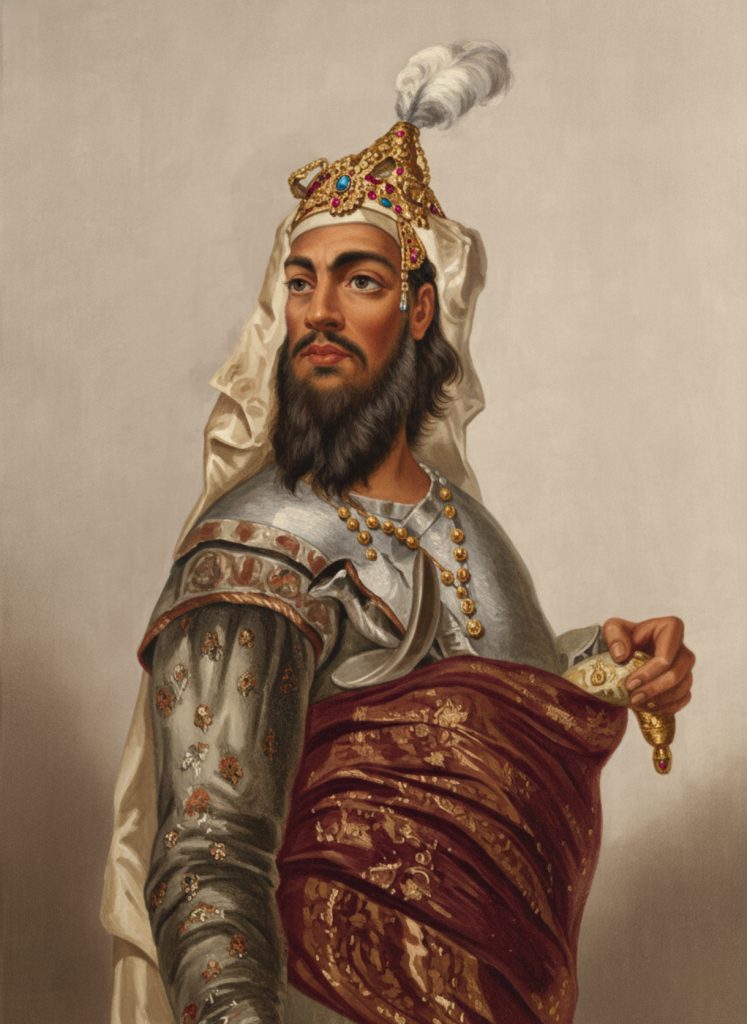
As the eldest son, Kunwar Singh inherited the zamindari (landholding) and the traditional sense of duty associated with his family. British records describe him simply as “a man of commanding presence, intelligent and of determined character.” Even in his youth, he was known for his horsemanship, hunting abilities, and courage.
Background to the Revolt
By the middle of the 19th century, the authority of the East India Company had become firmly established in Bihar. Local land settlements were harsh, British interference with traditional estates was common, and British officers often humiliated local nobles. Furthermore, the sepoys stationed in garrisons like Danapur were experiencing growing unrest due to various religious and economic issues. It was in this environment of widespread tension that the Revolt of 1857 began.
Command of the Bihar Rebellion
The revolt reached Bihar on 25 July 1857, when the sepoys of the Danapur cantonment mutinied against their British officers. These sepoys marched toward Jagdishpur and requested the leadership of Babu Kunwar Singh. Despite his old age and illness, the zamindar decided to join the rebellion. He is reported to have expressed his commitment, saying, “It is better to die with honor than to live in chains.”
Kunwar Singh formally took command of the rebel forces. He was supported by his younger brother Babu Amar Singh, his trusted associate Hare Krishna Singh, and several other loyal commanders who played key roles in mobilizing the uprising across Shahabad. Their immediate military objective was the British position at Arrah.
The Siege of Arrah and Tactical Retreat
The Siege of Arrah was a critical event fought between 27 July and 3 August 1857 in the small town of Arrah, Bihar. A small group of about 18 European civilians and 50 Indian soldiers from the Bengal Military Police Battalion had fortified a small outbuilding. They were besieged by a massive rebel force led by Veer Kunwar Singh, consisting of 2,500 to 3,000 sepoys from three mutinying regiments, supported by an estimated 8,000 irregular fighters. Despite being heavily outnumbered, the small garrison successfully held out for eight days with limited supplies.
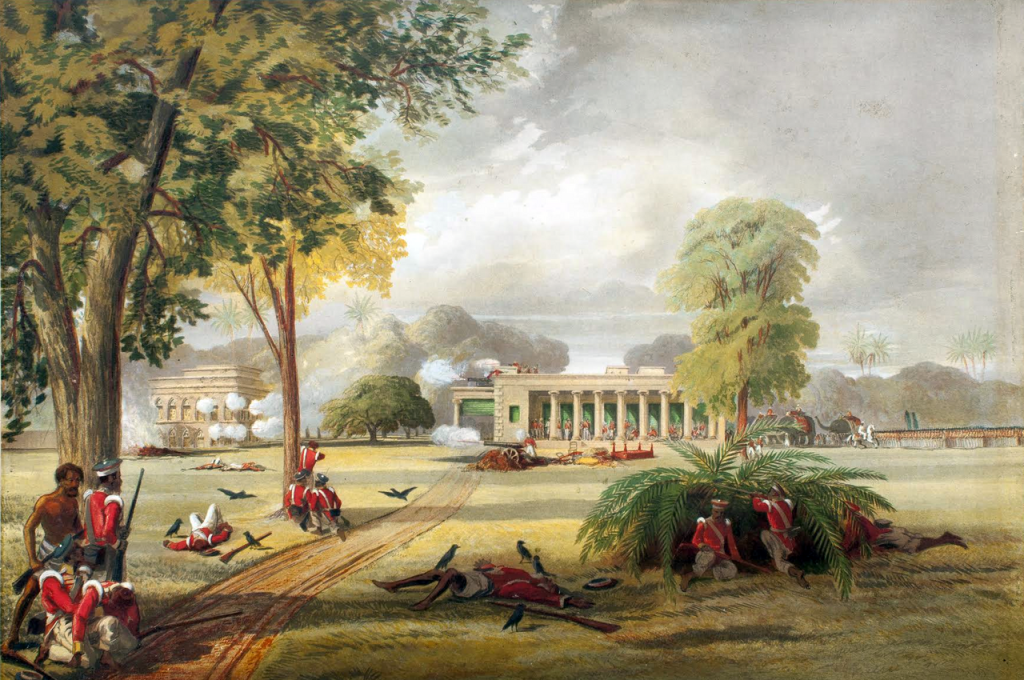
The British attempted to break the siege with two separate relief expeditions. The first force of about 415 men was ambushed and suffered a devastating loss of nearly 290 casualties. A second relief force, commanded by Major Vincent Eyre, defied orders, pressed forward with 225 men and artillery, reached Arrah, scattered Kunwar Singh’s forces, and successfully rescued the besieged men. Remarkably, only one of the original defenders was injured. Following the relief, Major Eyre pursued Kunwar Singh’s army toward Jagdishpur. His troops eventually overpowered the rebels and captured the palace by 12 August.
Kunwar Singh had already retreated, but Eyre’s troops destroyed much of Jagdishpur, including the palace and a temple, an act that later drew public censure. The Siege of Arrah firmly marked the start of Kunwar Singh’s open and prolonged resistance against the British East India Company.
Guerrilla Warfare and The Legend
After the loss at Arrah, Kunwar Singh recognized that he could not defeat the superior British army in a direct confrontation. He successfully switched his strategy to guerrilla warfare, relying on surprise attacks, rapid movements, and his knowledge of the local rivers and forests.
One of the most defining moments of his campaign occurred while crossing the Ganga River near Ballia. When a bullet struck his left wrist, and to prevent the wound from causing further infection, the warrior reportedly cut off his own injured arm and threw it into the Ganga. This act, whether fully accurate or legendary, became a lasting symbol of his extreme commitment to the cause.
Campaign in Northern India and Final Days
Kunwar Singh continued the struggle even after the British recaptured his fort. Between late 1857 and early 1858, he led his forces across various territories, including Rewa, Azamgarh, and Ghazipur, coordinating with other rebel leaders in eastern Uttar Pradesh. In March 1858, his forces briefly captured the town of Azamgarh before British columns drove them out. British officers acknowledged his skill, calling him “the ablest and most dangerous enemy in Eastern India.”
Kunwar Singh returned to Bihar one last time in April 1858. On 23 April 1858, he fought his final major battle near Jagdishpur, where he defeated a British force led by Captain Le Grand. Just three days later, on 26 April 1858, the 80-year-old hero died at his ancestral fort in Jagdishpur, having secured a victory in his last action.
Historical Significance and Legacy
Kunwar Singh’s leadership is remembered as a crucial element of the 1857 uprising. His active campaign linked the rebellion in Bihar with the wider revolt in Uttar Pradesh, demonstrating both regional strength and national scope. Historians agree that his sustained resistance “transformed Bihar from a quiet province into one of the most turbulent theatres of the 1857 rebellion.”
He stands out among local rulers who either compromised or remained neutral, having risked his estate and his life for independence. His legacy is officially recognized:
- The Government of India issued a postal stamp in his honor in 1966.
- The Veer Kunwar Singh University was established in Arrah in 1992.
- His birth anniversary is celebrated annually as “Veer Kunwar Singh Jayanti” on April 23.
His defiance at an advanced age ensures his place not just in history books, but as a continuing symbol of resistance and regional pride in India.