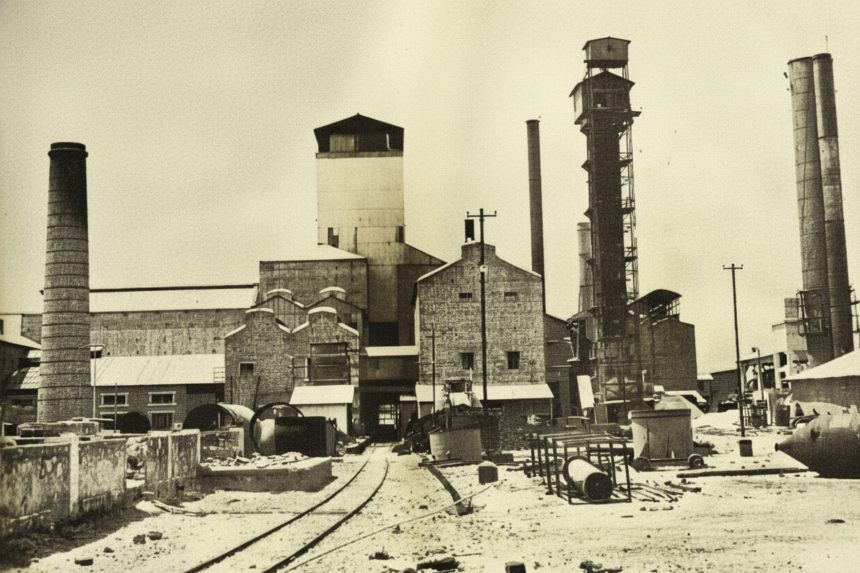
On the banks of the Sone River in Bihar’s Rohtas district stands the ghost of what was once one of India’s most ambitious industrial dreams, Dalmianagar. Today, its rusting chimneys and crumbling quarters tell a story of decline, but there was a time when this township symbolized India’s industrial optimism. Established in the 1930s by industrialist Ramkrishna Dalmia and developed by his son-in-law Shanti Prasad Jain, Dalmianagar grew into a self-contained city of factories, workers, and dreams.
The Birth of an Industrial Hub
Dalmianagar was conceived in 1933, when Rohtas Industries Limited (RIL) began setting up factories along the Grand Trunk Road near Dehri-on-Sone. The location was strategic, it had access to the Sone River, abundant limestone in the nearby Kaimur hills, bamboo forests, and a railway connection. Within a few years, the town had become a thriving industrial hub.
The first major unit, the sugar mill, began operations in 1933. Soon after, a cement plant came up in 1938, inaugurated by none other than Netaji Subhas Chandra Bose. The following year, India’s future President Dr. Rajendra Prasad inaugurated the paper mill. By the 1940s, Dalmianagar was home to a full-fledged industrial complex that included chemical plants, a vanaspati unit, asbestos-cement production, and a power house. The Rohtas Industries Limited became one of India’s largest industrial conglomerates, producing cement, paper, chemicals, sugar, and more, all within one sprawling campus.
The Golden Years
By the 1950s, Dalmianagar had earned the nickname “the Jamshedpur of Bihar.” It wasn’t just a cluster of factories; it was a well-planned township built for thousands of workers and their families. The company provided housing quarters, schools, hospitals, clubs, temples, and even an airstrip. The Rohtas Club and the Bengali Club hosted cultural events, while schools offered English-medium education to employees’ children.
The township had its own railway line, the Dehri-Rohtas Light Railway, which connected the limestone quarries and nearby villages to the factory gates. At its peak, the industrial area spread over more than 2,000 acres, directly employing around 10,000 workers and supporting another 5,000 indirectly.
The cement plant alone was among the largest in India, and the paper unit contributed nearly one-fifth of the country’s total production. The chemical division produced caustic soda, bleaching powder, sulphuric acid, and other products that supported the paper mill and vanaspati unit. Everything was interconnected — a perfect example of industrial synergy.
For the workers, life in Dalmianagar was more than a job. It was a community. People from across India, from Punjab to Uttar Pradesh and Bengal — migrated here in search of work. The township offered steady income, education, healthcare, and social life. For a generation, Dalmianagar stood as a shining example of industrial Bihar’s potential.
The Beginning of the Decline
But by the 1970s, the glow began to fade. The seeds of decline had already been sown.
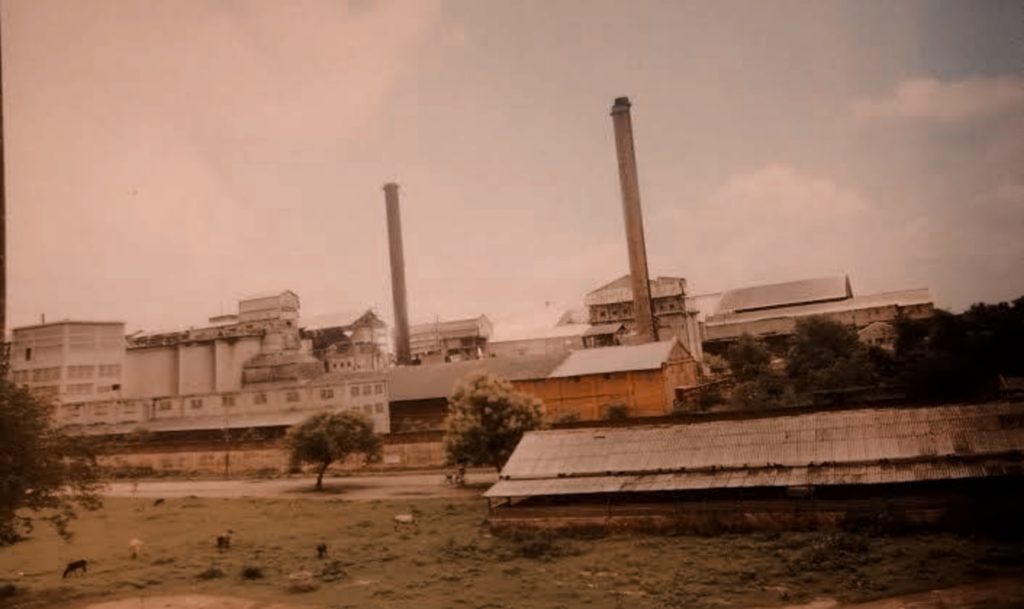
One of the biggest reasons was stagnation in management. After the early expansion years, the company failed to modernize. The last major investment in plant machinery was done in the late 1950s. While other industrial centers evolved with automation and new technology, Rohtas Industries remained stuck in the past.
Labour unrest also took its toll. Frequent strikes, political interference, and union rivalries disrupted production. The once-disciplined workforce grew restless as wages stagnated and management failed to respond to changing expectations.
The broader environment in Bihar made things worse. The 1970s and 1980s saw a steady deterioration in law and order. Dacoities, kidnappings, and extortion became common in Rohtas district. Industrialists and skilled professionals began leaving. The atmosphere of insecurity crippled both morale and investment.
Collapse of a Giant
By the early 1980s, Dalmianagar was in deep trouble. Power cuts were frequent, raw material supply had become irregular, and financial losses piled up. The sugar mill had already shut down in 1968. In 1984, the inevitable happened, all units of Rohtas Industries Limited were officially closed. Overnight, thousands lost their jobs. The once-bustling township fell silent.
After the closure, the government made occasional attempts to revive the industries, but none succeeded. Corruption, lack of political will, and legal disputes over land ownership kept investors away. In the 1990s, a government-appointed board tried to restart operations with a ₹40 crore infusion, but the plan never took off.
The once-famous Dehri-Rohtas Light Railway was shut down, and its tracks were pulled apart. The giant chimneys that once defined Dalmianagar’s skyline began to rust and crumble. The spacious housing quarters that once echoed with children’s laughter now stand deserted or illegally occupied.
The Human Cost
The decline of Dalmianagar was not just an economic tragedy, it was deeply human. Entire families that had lived comfortably for decades suddenly found themselves unemployed. Many migrated to other states in search of work, some to Punjab’s farms, others to Delhi and Mumbai as laborers. Those who stayed behind tried to survive on petty trade or daily-wage work.
Generations grew up listening to stories of how their parents or grandparents had once worked in a town with electricity, hospitals, and English schools — luxuries that most villages in Bihar still lack. For them, Dalmianagar is both a source of pride and a painful memory of what was lost.
The Wasted Land and Broken Promises
Even today, large chunks of Dalmianagar’s factory land remain unused. In 2007, Indian Railways purchased more than 200 acres of the old Rohtas Industries estate for about ₹140 crore, promising to develop it for new projects. But almost two decades later, nothing significant has been built there.
In 2023, the Patna High Court ordered eviction of over 1,400 families still living in old worker quarters, paving the way for auctioning the land. For many, it felt like the final erasure of Dalmianagar’s legacy.
Locals still hope that the area can be revived, not necessarily as a heavy-industry hub, but as a logistics or agro-industrial park. The region’s connectivity and available land make it ideal for modern development. But bureaucracy, litigation, and a lack of clear vision continue to stall any real progress.
Lessons from Dalmianagar’s Fall
The story of Dalmianagar offers several lessons that remain relevant even today. First, it shows that industries cannot rely solely on past glory, modernization and reinvestment are essential for survival. Second, industrial townships thrive only when the surrounding social and political environment is stable. When law and order collapses, even the best-built factories crumble.
Third, and most importantly, industrial decline has a long shadow. It doesn’t just kill production; it destroys communities, livelihoods, and generations of hope.
A Town That Time Forgot
Walking through Dalmianagar today feels like stepping into a forgotten chapter of India’s industrial history. The massive cement kilns stand like monuments to ambition, the paper factory’s tall chimneys pierce the sky in silence, and the once-grand Rohtas Club lies in ruins. Stray cattle wander through streets that once saw workers cycling to shifts and children rushing to school.
For Bihar, the fall of Dalmianagar is a painful reminder of how fragile industrial progress can be. For India, it is a cautionary tale that industrial dreams, no matter how grand, cannot survive without consistent vision, governance, and adaptation.
Dalmianagar may no longer hum with the rhythm of machines, but in the memories of thousands who once lived there, it remains alive, a symbol of what Bihar once was and what it could still be if history’s lessons are finally learned.