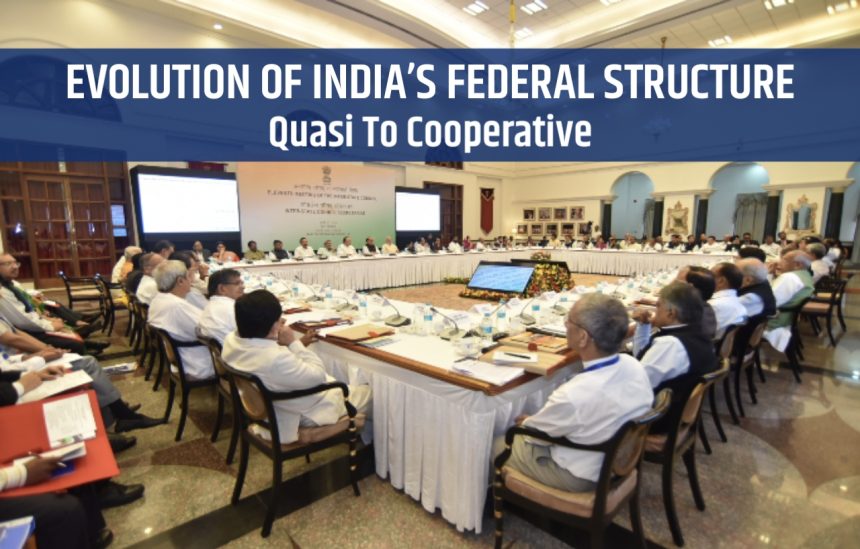
The evolution of India’s federal structure since 1950 represents one of the world’s most intricate experiments in governance, expertly blending unity with diversity. Its architects deliberately sought to fuse unity with diversity, central authority with state autonomy, and parliamentary sovereignty with judicial oversight. As Dr. B.R. Ambedkar famously observed, India’s Constitution is “federal in form but unitary in spirit.” Over the decades, this structure has dynamically evolved, shaped by shifting political realities, landmark judicial interpretations, and institutional overhauls. This comprehensive analysis traces that evolution—from the strong, centralized, quasi-federal blueprint of 1950 to the increasingly complex cooperative federalism model of the present day—through five critical phases.
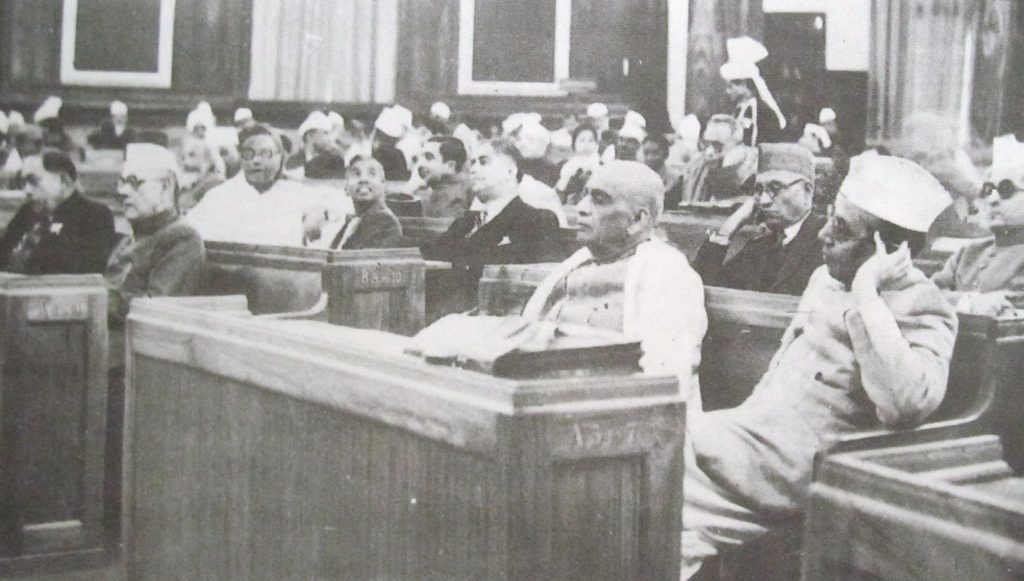
I. Foundational Framework: The Quasi-Federal Blueprint (1950–1967)
The Constitutional Design and K.C. Wheare’s Perspective
At its inception, India’s federal design defied classical definitions. The British constitutional expert K.C. Wheare aptly termed it “Quasi-Federal”—a system deliberately blending federal and unitary features. Unlike classical federations (like the US or Australia) where constituent units possess clear, guaranteed sovereignty, India’s model was crafted to establish a powerful central government capable of overriding state powers during crises.
Mindful of the Partition’s aftermath and the urgent need for national integration, the Constituent Assembly engineered a system tilted heavily toward centralization. This intent is visible in the fundamental choices made: residuary powers (Article 248) were vested in the Union, not the states.
Centralizing Provisions and Their Implications
Several provisions were built into the framework to ensure the Centre’s supremacy:
- Article 3 grants Parliament the authority to unilaterally alter state boundaries or names, underscoring the Centre’s flexible management over India’s territorial map.
- Articles 249 and 250 empower Parliament to legislate on subjects reserved for the states (State List) under conditions of national interest or emergency.
- Article 356, authorizing President’s Rule, allows the Union to abruptly seize control of a state’s administration upon the failure of “constitutional machinery.”
- The Concurrent List (Seventh Schedule) permits both levels to legislate, but the Union law decisively prevails in cases of conflict (Article 254).
Financially, the balance also tipped toward the Centre. While the Finance Commission (Article 280) recommended statutory transfers, the Planning Commission—an extra-constitutional body established in 1950—emerged as the primary engine for central planning and resource allocation, effectively controlling the flow of developmental funds.
Political Context: The Era of One-Party Dominance
The period between 1950 and 1967 was defined by the dominance of the Indian National Congress at both the Centre and in nearly all states. This political homogeneity muted intergovernmental tensions, as conflicts were typically resolved internally within the party hierarchy rather than through constitutional battles. The Prime Minister’s Office and the Planning Commission deftly coordinated state policies using financial incentives and political leverage. This meant the constitutional quasi-federal framework quickly became a political reality of centralized governance, leaving states dependent on central grants and curtailing regional political assertion.
II. The Era of Centralization and Conflict (1967–1990)
The Rise of Regional Parties and Centre-State Tensions
The 1967 general elections proved a watershed, shattering the Congress monopoly. For the first time, major states fell to opposition or regional parties. States like Tamil Nadu, Kerala, and West Bengal rapidly became political arenas where non-Congress state governments directly confronted a Congress-dominated Centre.
This era quickly devolved into political confrontation, marked by the intense misuse of Article 356. Between 1967 and 1990, President’s Rule was invoked over 90 times, frequently used as a political weapon to dismiss non-Congress governments on questionable grounds. This practice severely undermined the federal balance.
Misuse of Article 356 and the Sarkaria Commission Report
Responding to the rising political storm, the government established the Sarkaria Commission (1983) to comprehensively review Centre-State relations. Its 1988 report remains a foundational text in the debate over federal power.
Key recommendations sought to impose constitutional discipline:
- Article 356 should be used sparingly and only as a last resort, demanding clear, verifiable evidence of a constitutional breakdown.
- Governors must function as impartial constitutional heads, not as political agents of the Centre.
- The Inter-State Council (Article 263) should be immediately activated to foster cooperative consultation.
- Greater shares of central revenue must devolve to states through predictable, formula-based mechanisms.
Though not immediately implemented, the Commission’s findings laid the necessary intellectual groundwork for future reforms and critical judicial intervention.
Judicial Safeguards: Prelude to the S.R. Bommai Case
Even before the landmark S.R. Bommai v. Union of India (1994) judgment, the judiciary began asserting its role as the guardian of the federal structure. The eventual Bommai decision—rooted in the conflicts of the late 1980s—was decisive: it declared that the imposition of President’s Rule is subject to judicial review, and that a government’s majority must always be tested on the Assembly floor, not merely in the Governor’s partisan report. This judicial restraint signaled a crucial shift from arbitrary “centralized control” toward fundamental constitutional accountability.
III. The Coalition Politics Influence (1990–2014)
The Dawn of Consensus Federalism
The 1990s marked the permanent arrival of coalition governments at the Centre, fundamentally altering the calculus of Centre-State dynamics. Since no single party could secure an absolute majority, regional parties became indispensable to national governance. This political necessity fostered a system often termed “consensus-based federalism.”
The political reality under the United Front (1996–98), NDA-I (1998–2004), and UPA (2004–2014) saw a dramatic reduction in confrontational federalism. The Centre, driven by self-preservation, increasingly sought consultation over coercion, institutionalizing dialogue through revived bodies.
The Expanding Role of the Inter-State Council
The Inter-State Council (ISC), established in 1990 under Article 263, finally evolved into an active platform for structured dialogue. Its regular meetings tackled crucial issues like internal security, fiscal devolution, and resource-sharing. The ISC encouraged both horizontal cooperation among states and vertical consultation with the Union, minimizing reliance on unstable, ad hoc political bargaining.
Fiscal Federalism and Economic Devolution
Economic liberalization in 1991 further amplified states’ demands for fiscal autonomy. With the dismantling of the centrally planned economy, states began actively competing for investment and infrastructure. Successive Finance Commissions—notably the 10th (1995) and 12th (2005)—responded by recommending greater untied transfers and rationalized central grants.
This period also firmly established asymmetrical federalism—special constitutional provisions (Articles 370, 371A–J) tailored to address the unique historical, ethnic, or geographical factors of specific states. While critical for accommodating diversity, these asymmetries also sparked ongoing debates about the uniformity of federal rights.
Cooperative Politics and Decline of Article 356 Misuse
During the coalition era, the infamous Article 356 saw a significant decline in misuse. Political federalism had achieved what constitutional safeguards alone could not: mutual restraint born of interdependence. India’s federal system, once strongly quasi-unitary, was now operating through genuine coalitional consensus, paving the way for the next critical paradigm shift toward cooperation.
IV. The Paradigm Shift to ‘Cooperative Federalism’ (2014–2025)
From Planning Commission to NITI Aayog
The government formed in 2014 immediately signaled a structural overhaul of institutional federalism. The abolition of the Planning Commission and the establishment of NITI Aayog (National Institution for Transforming India) in 2015 represented a massive stride toward formalizing cooperative federalism.
Unlike its predecessor, which imposed top-down plans, NITI Aayog champions bottom-up planning, genuine state participation, and competitive federalism—actively encouraging states to innovate and improve performance. Its Governing Council, which includes all Chief Ministers, ensures regular, high-level dialogue on national priorities. Critics, however, argue that NITI Aayog’s lack of statutory authority and independent fiscal power limits its effective leverage compared to the formidable Planning Commission. This fuels the debate over whether cooperative federalism is truly a structural transformation or merely a rhetorical aspiration.
The GST Regime: A Federal Economic Compact
The implementation of the Goods and Services Tax (GST) in 2017 stands as perhaps the most transformative reform of recent decades—a massive economic compact central to any analysis of the impact of GST on Indian fiscal federalism. The GST merged a labyrinth of central and state taxes into a unified system, jointly administered through the GST Council (Article 279A).
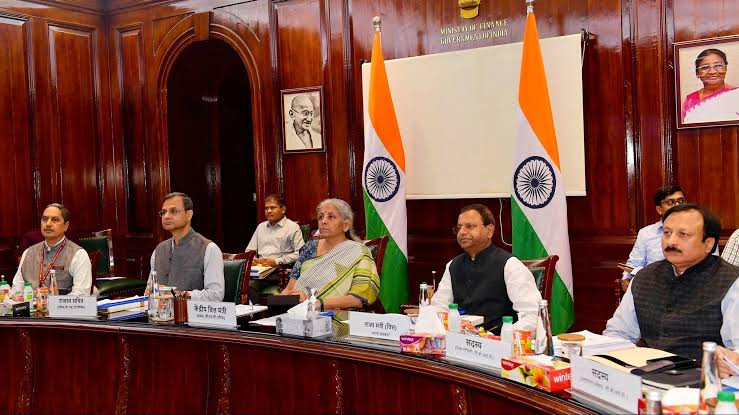
The GST Council, composed of the Union Finance Minister and all state finance ministers, operates on the principle of consensus-based decision-making. It is a unique federal institution that tangibly blends cooperative deliberation with fiscal integration.
Yet, the GST regime has simultaneously exposed acute tensions:
- Revenue shortfalls and delayed compensation payments have strained Centre-State trust.
- States often argue that their fiscal autonomy has critically narrowed, as major tax levers are now controlled by the Council.
Despite these challenges, the GST Council has successfully institutionalized a robust culture of fiscal consultation, representing the most tangible realization of cooperative federalism in practice.
Other Dimensions of Cooperative Federalism
Initiatives like the Aspirational Districts Programme and state rankings on ease of doing business further reinforce the competitive aspect of federalism. Concurrently, the 15th Finance Commission (2021–26) recalibrated revenue-sharing, granting greater weight to performance and demographic management criteria. In the digital age, intense intergovernmental collaboration on health (especially during the COVID-19 pandemic), education, and environmental policy demonstrates that India’s federalism has matured into true multi-level governance, effectively integrating central, state, and local institutions.
V. Future of Indian Federalism: Challenges and Recommendations (2025 Outlook)
Key Constitutional Challenges to Indian Centre-State Relations
As India approaches the 75th year of its republican journey, the federal compact is facing renewed stress. The key constitutional challenges to Indian centre-state relations primarily revolve around three critical friction points:
- Fiscal Strain and State Debt: States are struggling with reduced revenue autonomy, rapidly mounting debts, and the burden of conditional central grants. The GST transition requires a fundamental reform in the compensation mechanism and greater flexibility in state borrowing limits.
- The Role of Governors: The Governor’s office remains intensely contentious, frequently accused of partisan political conduct—whether by delaying assent to bills or influencing government formation. Despite judicial clarity in cases like Nabam Rebia (2016), the political misuse of this vital constitutional office persists.
- Resource Allocation and Political Polarization: Allegations of explicit “political bias” in fund distribution, especially through centrally sponsored schemes, threaten to erode the goodwill required for cooperative federalism. The centralization of major national policies in education, health, and taxation also raises persistent concerns about undermining the spirit of decentralization enshrined in the 73rd and 74th Amendments.
Recommendations for Strengthening Federal Balance
The delicate balance requires thoughtful, structural reforms:
- Institutional Revitalization: The Inter-State Council must be empowered to meet regularly and function as a mandatory, permanent, and effective dispute resolution forum.
- Legislative Reforms: Establish a clear, codified framework defining the role and timelines for Governors, specifically limiting their discretionary powers.
- Fiscal Empowerment: Strengthen the authority of the Finance Commission to ensure predictable, rule-based transfers, and promote greater direct fiscal devolution to local bodies.
- Judicial Vigilance: Continue to vigorously enforce the doctrine of colourable legislation and judicial review to preempt central encroachment on state subjects.
- Digital Federalism: Fully harness data-sharing and e-governance platforms to facilitate transparent, real-time coordination between the Centre and the states.
A Balanced Outlook
India’s federalism has proven highly adaptive, shifting from the rigidity of quasi-federalism to the flexibility of cooperation. Yet, this equilibrium remains persistently delicate—tested by economic pressures, political competition, and ongoing constitutional ambiguities. The essential task ahead is to preserve the spirit of national unity without diminishing the essence of regional autonomy. As India advances toward its centenary as a republic, the strength of its democracy will hinge entirely on how effectively it maintains this foundational federal balance.
Conclusion: The Enduring Journey of Indian Federalism
The evolution of India’s federal structure since 1950 demonstrates a profoundly adaptive constitutional order that has successfully weathered periods of political centralization, fragmentation, and economic transformation. From K.C. Wheare’s initial quasi-federal construct to NITI Aayog’s cooperative vision, Indian federalism has been, and remains, both a political necessity and a unique constitutional experiment.
The coming decade will certainly see a deepening of both competitive and cooperative federalism, continually redefining governance in a politically multi-polar landscape. The federal spirit—tested, contested, and consistently reaffirmed—remains the cornerstone of India’s democratic resilience.