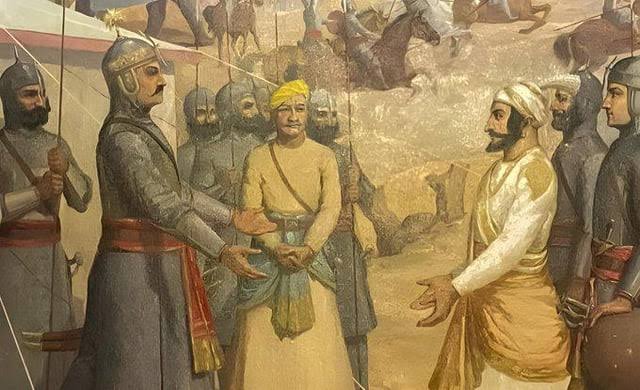
The Battle of Purandar in 1665 stands as a significant event in the annals of Indian history, marking a turning point in the power dynamics between the Maratha Empire and the Mughal Empire. Fought between the Maratha ruler Shivaji Maharaj and the Mughal forces under Jai Singh I of Amber, this confrontation is remembered not only for its military implications but also for the strategic acumen displayed by Shivaji in negotiating the Treaty of Purandar.
Background: Rising Maratha Power
By the mid-17th century, Shivaji had emerged as a formidable force in the Deccan region. His guerilla tactics, swift cavalry raids, and strong fortifications had carved out a robust Maratha territory, challenging the supremacy of the Mughals and the Adil Shahi Sultanate of Bijapur. As Shivaji’s influence expanded, the Mughal emperor Aurangzeb sought to curb this growing power. To achieve this, he dispatched Mirza Raja Jai Singh I with a massive army to subdue Shivaji.
The Strategic Importance of Fort Purandar
Fort Purandar, located in present-day Maharashtra, was a critical stronghold for Shivaji. With its steep slopes and sturdy walls, it was considered nearly impregnable. The fort served as a defensive bulwark protecting the Maratha heartland and was of immense strategic and psychological value.
The Siege of Purandar
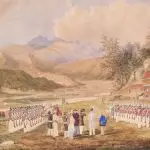
In early 1665, Jai Singh I, assisted by his trusted general Dilir Khan, laid siege to Fort Purandar. The Mughals deployed heavy artillery and used siege tactics to break the Maratha defenses. Despite fierce resistance from the Maratha garrison led by Murarbaji Deshpande, the Mughals gradually gained ground.
- Heroism of Murarbaji Deshpande
Murarbaji Deshpande, the brave commander of Fort Purandar, epitomized valor during the siege. When the Mughals breached the outer defenses, Murarbaji led a daring counterattack, inflicting heavy casualties on the enemy. His courage became legendary, though he was ultimately slain in battle. His sacrifice is remembered as a symbol of Maratha resilience.
Shivaji’s Tactical Retreat and the Treaty of Purandar
Recognizing the overwhelming might of the Mughal army and the impending fall of Purandar, Shivaji employed a pragmatic approach. He negotiated with Jai Singh I, leading to the Treaty of Purandar in June 1665. Under the terms of the treaty:
- Shivaji ceded 23 out of his 35 forts to the Mughals, including Purandar.
- He retained 12 forts along with an annual revenue of 1 lakh hons (a currency unit).
- Shivaji agreed to serve as a vassal of the Mughal Empire and assist them in military campaigns in the Deccan.
Aftermath and Legacy
The Treaty of Purandar was a strategic move by Shivaji rather than a sign of defeat. It allowed him to preserve his core territories and regroup his forces. Moreover, his subsequent meeting with Aurangzeb in Agra in 1666 turned sour, leading to his dramatic escape and reassertion of Maratha independence.
The Battle of Purandar is remembered for showcasing Shivaji’s ability to balance military strength with diplomatic finesse. His willingness to negotiate under unfavorable conditions and yet rebound stronger demonstrates his visionary leadership.