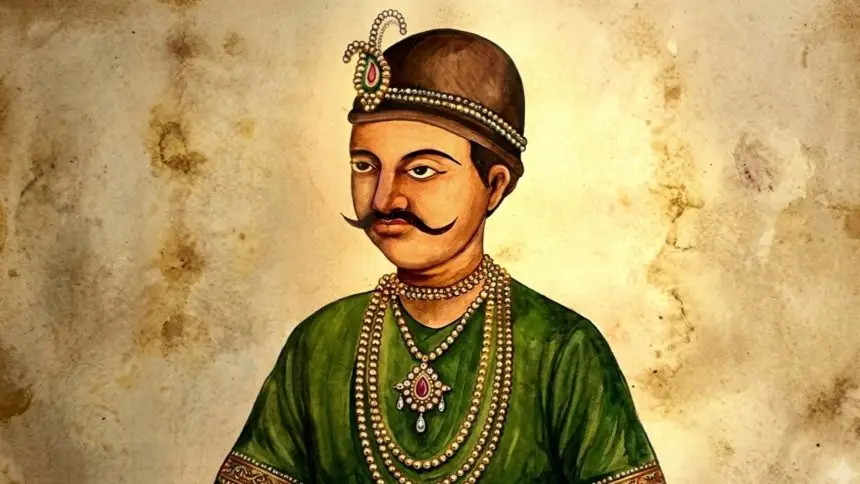
The Indian Rebellion of 1857 was far more than a sudden military mutiny—it was a vast, multi-front struggle against the expanding rule of the British East India Company. While many regional leaders fought with extraordinary courage in their respective territories, few demonstrated the strategic vision, operational mobility, and military adaptability of Tatya Tope.
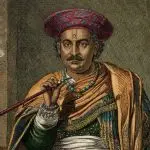
Born as Ramachandra Panduranga Yewalkar around 1814 in Yeola, near Nashik, into a Marathi Brahmin family, he would later become known to history as Tatya Tope (also spelled Tantia Tope in many British records). The title “Tope,” believed to refer to his command over artillery or military rank, became synonymous with one of the finest military minds produced during the uprising.
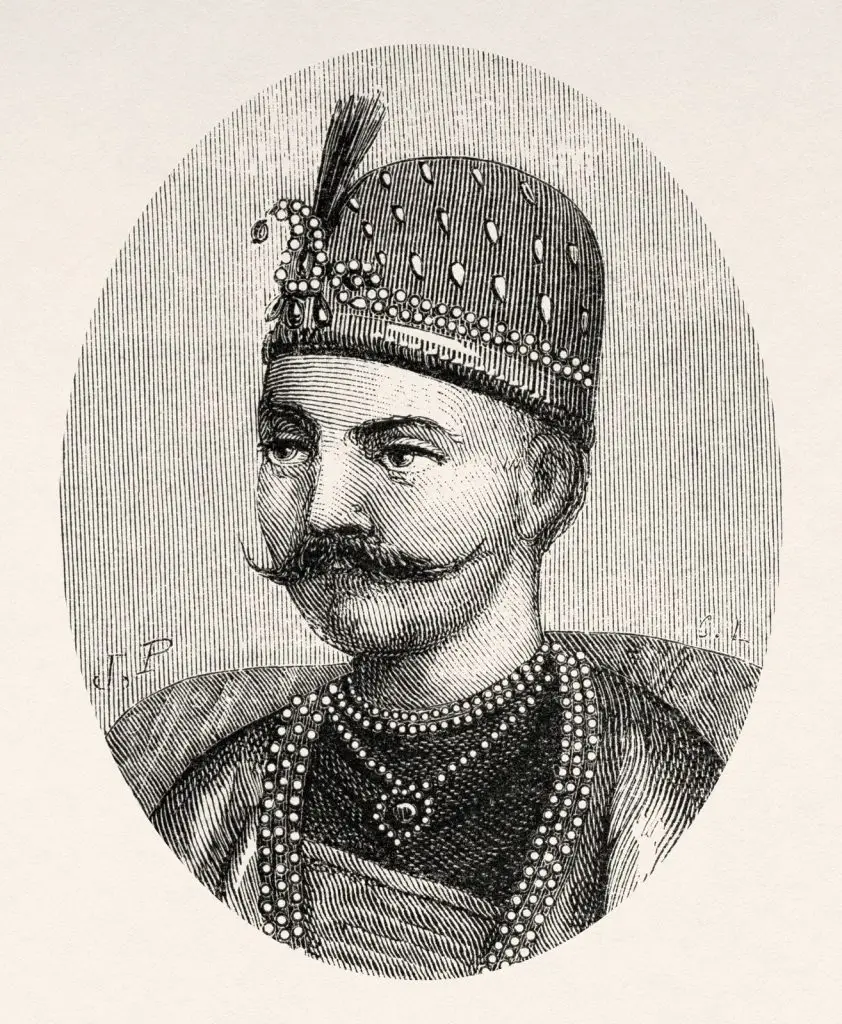
Rather than relying solely on conventional warfare, Tatya Tope transformed the rebellion into one of the earliest and most remarkable campaigns of large-scale guerrilla warfare in modern Indian history, repeatedly frustrating British commanders through speed, deception, and tactical brilliance.
From Bithoor to the Battlefield
Before emerging as one of the rebellion’s foremost commanders, Tatya Tope served as a trusted companion and administrator to Nana Saheb, the adopted son of the last Maratha Peshwa, Baji Rao II, at Bithoor.
When the British refused to recognize Nana Saheb’s inherited pension under their expansionist policies, resentment steadily grew. By the time the uprising erupted at Meerut in May 1857, Bithoor had already become a center of political dissatisfaction.
Following the outbreak of the rebellion, Cawnpore (present-day Kanpur) emerged as one of its principal theatres. Recognizing Tatya Tope’s exceptional organizational abilities, Nana Saheb entrusted him with senior military responsibilities.
It was during the campaign at Kanpur that Tatya first demonstrated his remarkable capacity to organize troops, manage artillery, coordinate supply lines, and lead large military formations under immense pressure.
The Strategic Alliance with Rani Laxmibai
After British forces under General Henry Havelock recaptured Kanpur, Tatya Tope refused to allow the movement to collapse. Instead, he shifted his operations across Central India to reinforce other centres of resistance.
His most celebrated military partnership was with Rani Laxmibai of Jhansi.
When Jhansi came under siege by Sir Hugh Rose in early 1858, Tatya attempted to relieve the city by leading forces toward Jhansi. Although that effort was unsuccessful, the alliance between the two leaders continued.
Their greatest achievement came shortly afterward with the dramatic capture of Gwalior.
Rather than engaging in a prolonged siege against one of India’s strongest fortresses, Tatya Tope and Rani Laxmibai successfully persuaded large sections of the Gwalior State army to join the revolutionary cause. As a result, the rebels occupied the city and its formidable fort with comparatively little resistance.
The capture of Gwalior briefly disrupted British plans in Central India and provided renewed momentum to a rebellion that was otherwise facing severe setbacks.
The Master of Guerrilla Warfare
The British eventually recaptured Gwalior, and Rani Laxmibai attained martyrdom in June 1858. By then, the conventional phase of the rebellion had largely ended.
Many revolutionary leaders had either fallen in battle, surrendered, or retreated.
Tatya Tope chose a different course. Instead of seeking decisive battlefield engagements against a superior army, he launched an extended campaign of mobile warfare that stretched across Central India for nearly a year.
Operating through the forests, ravines, and river valleys of the Narmada basin, Malwa, Bundelkhand, and parts of Rajputana, he kept thousands of British troops constantly on the move in pursuit of an enemy who rarely stayed in one place.
The Tactics that Frustrated the British
- Extreme Mobility
Tatya’s cavalry frequently covered forty to fifty miles in a single day, allowing his forces to appear unexpectedly and disappear before British columns could organize an effective response.
- Knowledge of the Terrain
His army relied heavily on local support and an intimate understanding of forests, river crossings, and difficult terrain, enabling them to evade much larger British forces.
- Targeted Military Operations
Rather than risking large open-field battles, Tatya focused on ambushing isolated detachments, disrupting supply routes, attacking communication lines, and capturing local treasuries to sustain the resistance.
British officers repeatedly expressed frustration at his ability to evade capture. On several occasions, he crossed the Narmada River despite heavy British surveillance, demonstrating an extraordinary command of logistics and maneuver that continues to attract the attention of military historians.
Betrayal, Capture, and Martyrdom
Ultimately, Tatya Tope was not defeated in open battle but through betrayal.
In April 1859, while taking refuge near the forests of Paron, he was betrayed by Man Singh, the Raja of Narwar, who entered into an agreement with the British authorities.
Tatya Tope was captured on 7 April 1859.
Following a swift military court-martial, he reportedly declared that he had acted only in obedience to his Peshwa and in the service of his motherland. He was sentenced to death.
On 18 April 1859, at Sipri (present-day Shivpuri in Madhya Pradesh), Tatya Tope was executed by hanging.
Contemporary accounts describe him facing death with remarkable composure. According to widely repeated narratives, he placed the noose around his own neck before the executioner stepped forward—a final act that became a lasting symbol of courage.
Legend Beyond History
Although historical records affirm Tatya Tope’s execution at Shivpuri, popular folklore in several parts of India later suggested that the man executed was a body double and that the elusive commander escaped into anonymity.
There is no conclusive historical evidence to support these stories, yet their persistence reflects the extraordinary reputation Tatya Tope earned during and after the rebellion. To many, it was difficult to believe that a commander who had repeatedly evaded one of the world’s most powerful armies could finally be captured.
Whether viewed through documented history or enduring legend, Tatya Tope remains one of the most remarkable military leaders of the 1857 uprising.
His campaigns demonstrated that disciplined leadership, strategic mobility, and intimate knowledge of the land could repeatedly challenge a far stronger and better-equipped imperial force. More than a revolutionary commander, Tatya Tope emerged as one of nineteenth-century India’s greatest military strategists, whose legacy continues to inspire students of warfare and the story of India’s long struggle for freedom.