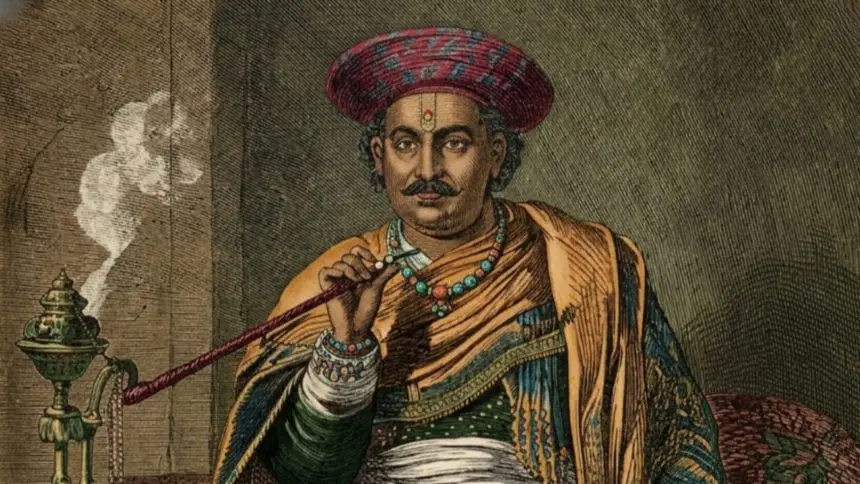
On 5 June 1857, a brief but extraordinary letter reached the British entrenchment at Kanpur. Addressed to Major General Hugh Massey Wheeler, it carried a formal warning from a man whom the British East India Company had long regarded as a trusted ally and gracious host. The sender was Nana Govind Dhondu Pant, better known as Nana Saheb Peshwa II. His message informed Wheeler that an attack would begin at 10:00 a.m. the following day.
The letter marked a decisive turning point in the Indian Rebellion of 1857. Until then, Nana Saheb had been known as the adopted heir of the last Peshwa of the Maratha Empire and a respected aristocrat living in Bithoor. Within days, however, he emerged as one of the principal leaders of the uprising against the East India Company.
Today, Nana Saheb remains one of the most debated figures in modern Indian history. British colonial narratives portrayed him as the mastermind behind the violence at Kanpur, while many later historians have argued that his legacy cannot be understood without considering the political grievances created by British expansionist policies. His life represents the complex intersection of diplomacy, resistance, military leadership, and historical controversy.
Who Was Nana Saheb Peshwa II?
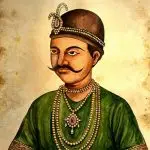
Nana Saheb Peshwa II, born Dhondu Pant on 19 May 1824, was the adopted son and designated heir of Peshwa Baji Rao II, the last ruler to hold the office of Peshwa of the Maratha Confederacy.
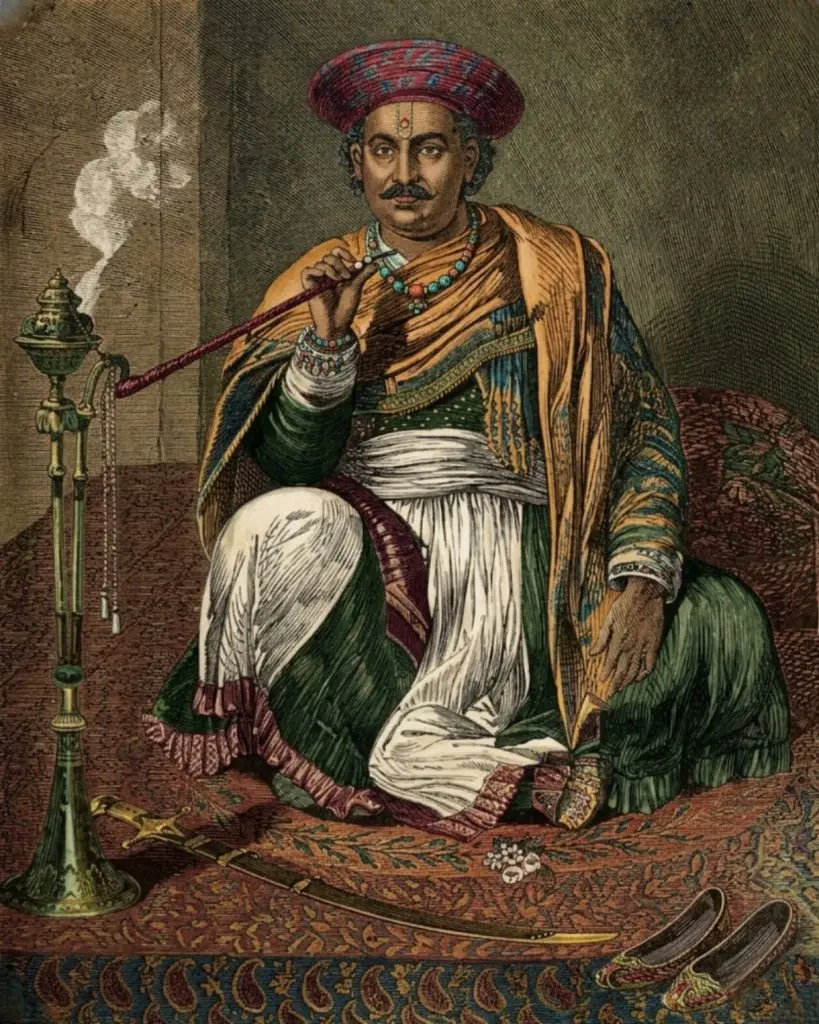
His biological parents, Narayan Bhat and Ganga Bai, belonged to a Deccani Brahmin family that had migrated from the Western Ghats to Bithoor, where the exiled Maratha court had been established after the fall of the Maratha Empire.
Although Nana Saheb never ruled an independent kingdom, he inherited the prestige and political legacy of the Peshwa dynasty. When the Revolt of 1857 erupted, he became the most prominent rebel leader in Kanpur and sought to revive Maratha political authority in northern India.
Early Life in Bithoor
The origins of Nana Saheb’s political journey lie in the collapse of the Maratha Empire.
Following the Third Anglo-Maratha War (1817–1818), the East India Company defeated Peshwa Baji Rao II, effectively ending Maratha supremacy in western and central India. Rather than imprisoning the defeated ruler, the Company exiled him to Bithoor, approximately 20 kilometres northwest of Kanpur.
In compensation for surrendering his political authority, Baji Rao II received an annual pension of ₹8 lakh (800,000 Rupees) and extensive tax-free estates around Bithoor. Although deprived of sovereign power, he maintained a royal household that preserved many traditions of the former Peshwa court.
Since Baji Rao II had no biological son, he formally adopted Dhondu Pant and his younger brother Bala Saheb in 1827, making Dhondu Pant his legal heir according to Hindu law and Maratha custom.
Bithoor gradually became an important centre where displaced Maratha nobles, administrators, scholars and military retainers gathered. It was here that Nana Saheb formed relationships with several individuals who would later play significant roles in the Revolt of 1857.
Among them were:
- Tatya Tope, who became one of India’s greatest guerrilla commanders and served as Nana Saheb’s close military associate.
- Azimullah Khan, an educated diplomat and political adviser who later acted as Nana Saheb’s secretary.
- Manikarnika Tambe, who would later become famous as Rani Lakshmibai of Jhansi.
These relationships, forged years before the uprising, would shape the leadership network of the rebellion.
Timeline: From Exile to Rebellion
1818
↓
Third Anglo-Maratha War ends

↓

Peshwa Baji Rao II exiled to Bithoor

↓

1827
Baji Rao II adopts Dhondu Pant
(Nana Saheb)

↓

1851
Death of Baji Rao II

↓

British refuse pension and inheritance claims

↓

1857
Nana Saheb joins the Revolt of 1857
Why Did Nana Saheb Rebel Against the British?
The death of Peshwa Baji Rao II on 1 February 1851 dramatically altered Nana Saheb’s relationship with the East India Company.
Although Hindu law recognised adopted sons as legitimate heirs, the British government refused to continue the annual pension that had been granted to Baji Rao II. Company officials argued that the pension had been a personal arrangement with the late Peshwa and did not automatically transfer to his adopted heir.
The refusal deeply offended Nana Saheb, who believed that both legal tradition and earlier agreements entitled him to continue receiving the pension.
This dispute unfolded during the tenure of Governor-General Lord Dalhousie, whose expansionist administration introduced policies that weakened the rights of many Indian rulers. Although Nana Saheb’s pension dispute was legally distinct from the annexation of princely states under the Doctrine of Lapse, many contemporaries viewed both policies as part of the same broader effort to deny adopted heirs political and financial recognition.
The loss of the annual pension and the gradual reduction of his political influence transformed Nana Saheb from a loyal aristocrat into an increasingly dissatisfied opponent of Company rule.
Attempts at Peaceful Negotiation
Contrary to later British portrayals, Nana Saheb did not immediately choose armed resistance.
His first response was to seek justice through legal and diplomatic channels.
He retained John Lang, the Australian-born barrister known for representing Indian clients against the East India Company, to pursue his claim within British India. When these efforts failed, Nana Saheb sent his trusted adviser Azimullah Khan to Britain.
Azimullah travelled to London with the hope of persuading British authorities to restore the pension through legal and parliamentary appeal. Despite extensive lobbying, the mission achieved no practical success.
The rejection convinced Nana Saheb that the colonial administration was unwilling to reconsider its decision.
By the mid-1850s, the possibility of restoring his rights through constitutional means had effectively disappeared. When unrest spread across northern India in 1857, Nana Saheb was therefore prepared to support a broader political and military challenge to British authority.
The Road to Rebellion
By the beginning of 1857, northern India was engulfed in growing unrest. Rumours that new Enfield rifle cartridges were greased with cow and pig fat had spread rapidly among the sepoys of the Bengal Army, fuelling religious anxieties and exposing deeper resentment against the East India Company’s rule.
Despite the mounting tensions, Nana Saheb continued to maintain cordial relations with British officials in Kanpur. He regularly entertained Company officers at his residence in Bithoor, and his hospitality reinforced the belief that he remained a loyal ally of the British administration.
Major General Hugh Massey Wheeler, commander of the Kanpur garrison, placed considerable trust in Nana Saheb. When disturbances began to spread across northern India in May 1857, Wheeler requested Nana Saheb’s assistance in safeguarding the Company’s treasury and military stores. Nana Saheb agreed, and his guards were entrusted with protecting these valuable assets.
This decision unintentionally placed a significant portion of the Company’s wealth and military resources within Nana Saheb’s sphere of influence just as rebellion was about to erupt.
Kanpur Joins the Revolt
On the night of 4–5 June 1857, sepoys stationed at Kanpur belonging to the 1st, 2nd Light Cavalry, 53rd Native Infantry, and 56th Native Infantry rose in revolt against the East India Company.
The rebels seized the government treasury, captured the magazine, released prisoners from the jail and set fire to several government buildings before marching towards Delhi, intending to join Emperor Bahadur Shah II, who had become the symbolic leader of the uprising.
According to several contemporary accounts, Nana Saheb intercepted the rebel forces at Kalyanpur, situated along the Grand Trunk Road. He reportedly persuaded them to return to Kanpur by promising increased pay, rewards and a more practical military objective.
Rather than allowing the rebellion to disperse towards Delhi, Nana Saheb sought to establish control over Kanpur itself. His broader political vision appears to have been the restoration of Maratha influence in northern India while driving the East India Company out of one of its most strategically important military centres.
Within days, Nana Saheb was proclaimed Peshwa, reviving a title that had disappeared with the fall of the Maratha Confederacy nearly four decades earlier.
The Letter to General Wheeler
On 5 June 1857, Nana Saheb sent a formal communication to Major General Wheeler informing him that hostilities would commence the following morning.
Unlike many uprisings that began without warning, this letter demonstrated Nana Saheb’s intention to wage what he regarded as an organised military campaign rather than an act of sudden violence.
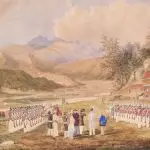
Wheeler immediately withdrew approximately one thousand British soldiers, civilians, women and children into a hastily constructed defensive position known as the Kanpur Entrenchment.
Unfortunately for the British, the fortification was poorly designed.
Instead of occupying the heavily fortified magazine, Wheeler chose an exposed barrack complex protected only by shallow earthworks and a wall barely four feet high. The enclosure lacked adequate shelter, reliable water supplies and sufficient protection against artillery.
These weaknesses would become painfully evident during the weeks that followed.
The Siege of Kanpur
On 6 June 1857, Nana Saheb’s forces opened fire on the British entrenchment, beginning one of the most significant sieges of the Indian Rebellion.
The rebel army possessed several advantages.
Heavy artillery captured from the Company’s magazine enabled continuous bombardment, while rebel sharpshooters maintained constant pressure on the defenders. Temperatures exceeded 40°C, water supplies rapidly diminished and disease spread throughout the crowded enclosure.
Inside the entrenchment, hundreds of civilians suffered alongside British soldiers. Food became scarce, medical supplies ran dangerously low and casualties increased each day.
Meanwhile, Nana Saheb established his headquarters at Kanpur and attempted to organise the rebel administration while directing military operations.
Timeline of the Siege
| Date | Event | Historical Significance |
|---|---|---|
| 5 June 1857 | Nana Saheb sends formal notice to General Wheeler. | Marks the beginning of open conflict. |
| 6 June 1857 | Siege of Kanpur begins. | Rebel artillery opens sustained bombardment. |
| 23 June 1857 | Large-scale assault launched on the anniversary of the Battle of Plassey. | The attack is repulsed despite heavy fighting. |
| 25 June 1857 | Negotiations for British evacuation begin. | Both sides seek an end to the prolonged siege. |
| 27 June 1857 | British evacuation towards Satichaura Ghat. | Leads to one of the most controversial episodes of the rebellion. |
Negotiating the British Evacuation
After nearly three weeks of continuous fighting, the British position had become increasingly desperate.
With water exhausted, ammunition limited and hundreds of casualties suffered, Major General Wheeler agreed to negotiate.
Discussions were conducted through intermediaries, including Azimullah Khan and Brigadier Jwala Prasad. Under the proposed agreement, the British garrison would surrender Kanpur and receive safe passage by boat to Allahabad.
Nana Saheb arranged approximately forty country boats at Satichaura Ghat to transport the evacuees down the Ganges.
Whether all parties trusted the agreement remains uncertain, but both sides recognised that continuing the siege would only result in greater loss of life.
The Satichaura Ghat Incident
On the morning of 27 June 1857, approximately 900 British soldiers, civilians, women and children marched from the entrenchment to Satichaura Ghat.
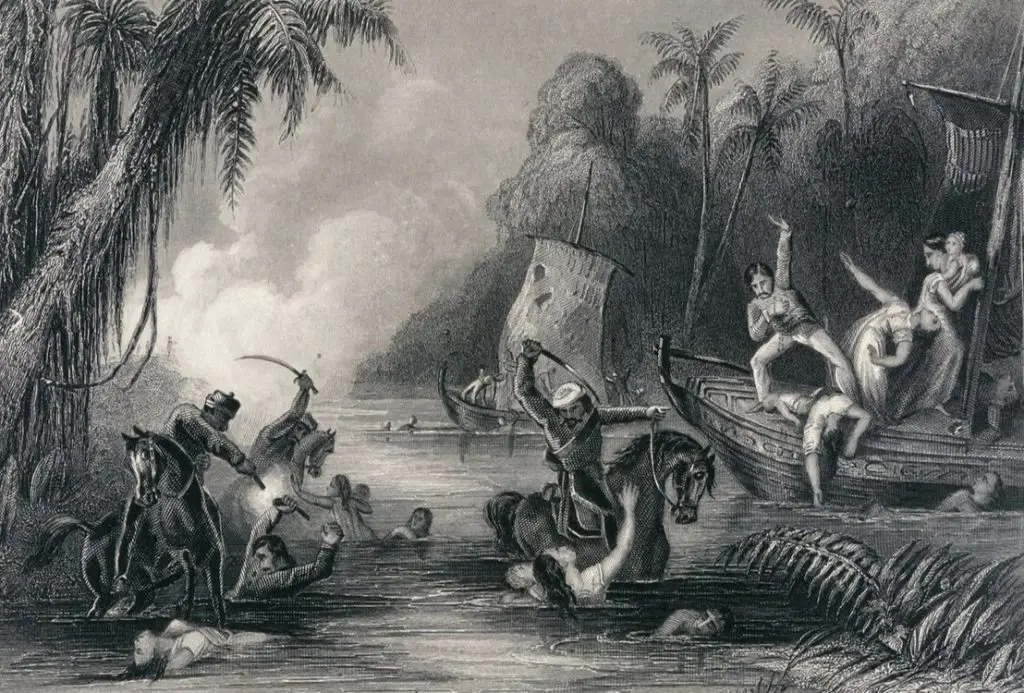
As they boarded the waiting boats, several unexpected problems emerged. Many boats had become stranded in the muddy riverbed because of the low water level. Confusion spread among the passengers and boatmen as preparations for departure stalled.
Moments later, gunfire erupted. Several contemporary accounts describe shots being fired from the vicinity of the riverbank, after which many Indian boatmen abandoned the boats by jumping into the river. Rebel soldiers then opened fire with muskets and artillery upon the trapped flotilla. Exactly how the violence began remains one of the most disputed questions of the Revolt of 1857.
British official accounts maintained that Nana Saheb had deliberately organised a massacre. However, a number of later historians have suggested alternative explanations, including confusion, panic, accidental firing, breakdowns in communication, or independent actions by rebel soldiers acting without a clearly documented order from Nana Saheb.
To this day, no surviving documentary evidence has conclusively established who ordered the attack, and the incident remains the subject of continuing historical debate.
Many British soldiers were killed during the fighting, while others drowned attempting to escape across the river. A number of women and children survived and were taken back into Kanpur as prisoners.
The Bibighar Killings
Following the violence at Satichaura Ghat, around 200 British women and children who had survived were taken to a small house in Kanpur known as the Bibighar.
For nearly three weeks, they remained prisoners while the military situation around Kanpur changed rapidly.
In July 1857, British forces led by Major General Henry Havelock advanced from Allahabad towards Kanpur, defeating rebel detachments along the way. As the British army approached the city, the fate of the prisoners became increasingly uncertain.
On 15 July 1857, the captives held inside the Bibighar were killed under circumstances that remain controversial. Contemporary British accounts placed responsibility directly upon Nana Saheb and his associates, while several later historians have argued that the available evidence does not conclusively establish who issued the final order. Various explanations—including decisions by subordinate commanders, local officials, or individuals acting amid panic as British forces closed in—have been proposed, but no interpretation commands universal acceptance.
Whatever the chain of command, the killings became one of the defining tragedies of the Revolt of 1857. News of the incident provoked widespread outrage in Britain and was subsequently used by the colonial administration to justify severe reprisals across northern India.
The Fall of Kanpur
On 16 July 1857, British forces under Henry Havelock defeated Nana Saheb’s army outside Kanpur and re-entered the city.
Unable to withstand the advancing British columns, Nana Saheb withdrew from Kanpur and returned briefly to Bithoor before abandoning it altogether.
In the weeks that followed, British troops occupied Bithoor, confiscated property associated with Nana Saheb and destroyed much of his palace. Many structures connected with the former Peshwa court were demolished, marking the end of Bithoor’s brief revival as a centre of Maratha political influence.
Although he had lost Kanpur, Nana Saheb’s resistance was far from over.
Continuing the Resistance
After leaving Kanpur, Nana Saheb moved through Awadh (Oudh), where the rebellion continued with considerable intensity.
He remained in contact with several prominent rebel leaders, including Tatya Tope and Begum Hazrat Mahal, both of whom continued to challenge British authority after many other centres of resistance had fallen.
Tatya Tope went on to wage one of the most remarkable guerrilla campaigns of the uprising, while Begum Hazrat Mahal organised resistance in Lucknow. Although their operations were not always coordinated, they shared the broader objective of preventing the British from re-establishing complete control over northern India.
By late 1858, however, British military superiority had gradually crushed most organised resistance. Rebel strongholds fell one after another, forcing surviving leaders to retreat or seek refuge.
The Mysterious Disappearance of Nana Saheb
Unlike many leaders of the Revolt of 1857, Nana Saheb was never captured.
Historical records indicate that he retreated towards the dense forests of the Terai along the border of Nepal. British officials repeatedly demanded that the Nepalese government surrender him, but no verified extradition ever took place.
From this point onward, firmly documented history gives way to conflicting reports and enduring mystery.
1. The Nepal Theory
British correspondence suggests that Nana Saheb, accompanied by his brother Bala Saheb and members of his household, found refuge within Nepalese territory under the government of Jung Bahadur Rana.
Some Nepalese reports claimed that he died of jungle fever in September 1859. British authorities, however, never accepted these reports as conclusive proof and continued searching for him for years afterward.
2. The Sihor Tradition
Another long-standing tradition originates from Sihor in present-day Gujarat.
According to local accounts, Nana Saheb escaped from Nepal, adopted the identity of a hermit known as Dayanand Yogindra, and spent the remainder of his life in relative anonymity before dying around 1903.
Despite its popularity in local tradition, no definitive documentary evidence has confirmed this claim.
3. British Intelligence Searches
Throughout the 1860s and 1870s, British intelligence investigated numerous rumours concerning Nana Saheb’s whereabouts.
Several elderly men were arrested on suspicion of being the former Peshwa, but repeated investigations failed to establish their identity. Despite years of surveillance, one of the most wanted leaders of the uprising effectively disappeared from the historical record.
His ultimate fate remains unknown.
Legacy of Nana Saheb Peshwa II
Nana Saheb occupies a unique place in the history of the Indian Rebellion of 1857.
To many nineteenth-century British writers, he symbolised betrayal and became the principal villain of the Kanpur tragedy. In contrast, many Indian historians have viewed him as a leader driven by political injustice, colonial expansion and the denial of rights that he believed had been legally guaranteed to him.
Modern scholarship generally adopts a more nuanced approach. It recognises Nana Saheb as a capable political organiser and military leader while also acknowledging that several of the most controversial events associated with his name—particularly the Satichaura Ghat incident and the Bibighar killings—remain subjects of continuing historical debate.
Whatever interpretation one adopts, his influence on the Revolt of 1857 is undeniable.
Unlike Rani Lakshmibai, who died in battle, or Tatya Tope, who was captured and executed, Nana Saheb vanished without leaving a confirmed record of his final years. That disappearance transformed him into one of the greatest historical mysteries of nineteenth-century India and ensured that his story would continue to inspire both scholarship and legend.