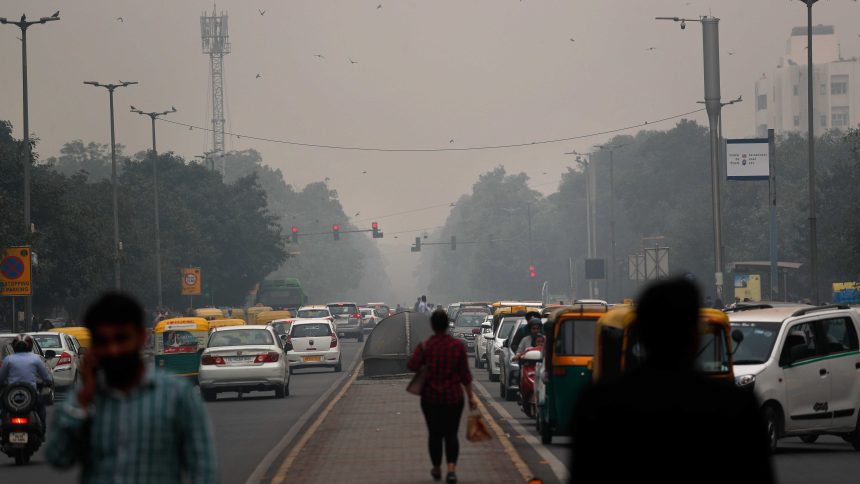
Delhi, India’s capital, is grappling with a severe air quality crisis that intensifies each winter, posing significant health risks to its residents. This article delves into the causes, impacts, and measures being taken to address this pressing issue.
Causes of Delhi’s Air Pollution
Several factors contribute to Delhi’s deteriorating air quality:
- Vehicular Emissions: With a burgeoning population, the number of vehicles on Delhi’s roads has surged, leading to increased emissions of pollutants like nitrogen oxides and particulate matter.
- Industrial Activities: Factories and power plants in and around Delhi emit significant amounts of pollutants, including sulfur dioxide and particulate matter, contributing to the smog enveloping the city.
- Construction Dust: Ongoing construction projects release large quantities of dust and particulate matter into the air, exacerbating pollution levels.
- Crop Residue Burning: Farmers in neighboring states such as Punjab and Haryana burn crop residues post-harvest, releasing vast amounts of smoke and particulate matter that drift into Delhi, significantly worsening air quality.
- Meteorological Factors: During winter, lower temperatures and calm winds lead to temperature inversions, trapping pollutants close to the ground and preventing their dispersion.
Health Impacts
The deteriorating air quality has severe health implications:
- Respiratory Issues: Increased cases of asthma, bronchitis, and other chronic respiratory diseases have been reported.
- Cardiovascular Problems: Exposure to high levels of air pollution is linked to heart attacks and other cardiovascular conditions.
- Premature Mortality: Studies indicate a rise in premature deaths attributable to prolonged exposure to polluted air.
Recent Developments
In December 2024, Delhi’s Air Quality Index (AQI) surpassed 400, indicating ‘severe’ conditions. In response, authorities implemented several measures:
- Educational Institutions: Schools adopted hybrid teaching modes, with online classes for students up to Grade 5.
- Work-from-Home Policies: Government offices staggered staff timings, and private organizations were advised to allow 50% of employees to work from home.
- Construction Activities: A halt on most construction activities was ordered to reduce dust emissions.
- Public Advisories: Vulnerable populations, including children and the elderly, were advised to stay indoors to minimize exposure.
Challenges and Criticisms
Despite these measures, challenges persist:
- Ineffectiveness of Short-Term Solutions: Initiatives like smog towers and water-spraying drones have been criticized for their limited impact.
- Lack of Regional Coordination: The absence of a unified approach among neighboring states hampers efforts to tackle pollution sources like crop burning.
- Inconsistent Policy Implementation: Fluctuating enforcement of regulations leads to recurring pollution spikes.
Long-Term Solutions
Experts advocate for comprehensive strategies:
- Promoting Public Transportation: Enhancing the public transport system can reduce reliance on private vehicles, thereby lowering emissions.
- Adopting Cleaner Technologies: Transitioning to cleaner fuels and technologies in industries and vehicles can significantly cut down pollution levels.
- Implementing Strict Emission Norms: Enforcing stringent emission standards for industries and automobiles is crucial.
- Regional Collaboration: Coordinated efforts among neighboring states are essential to address transboundary pollution sources effectively.
Delhi air quality crisis is a complex issue requiring sustained and coordinated efforts from government authorities, industries, and citizens. While short-term measures may provide temporary relief, long-term strategies focusing on sustainable development and environmental conservation are imperative to ensure breathable air for all.