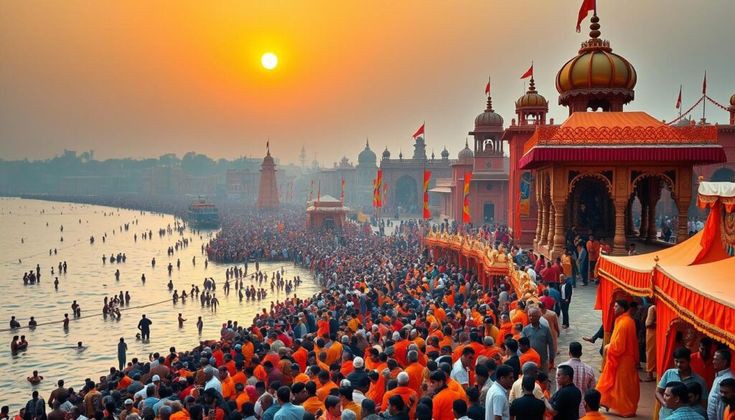
On the night of January 29, 2025, a devastating stampede at the Maha Kumbh Mela in Prayagraj, Uttar Pradesh, turned a sacred pilgrimage into a nightmare. As millions gathered for the Amrit Snan, one of the most auspicious bathing rituals of the festival, chaos erupted near the Sangam area—the confluence of the Ganga, Yamuna, and the Saraswati rivers. In an instant, what was meant to be a spiritual experience transformed into a scene of panic, cries for help, and heartbreaking loss.
The Incident: Maha Kumbh 2025 Stampede
Witnesses recall the tragic sequence of events unfolding in the early hours of the morning. Devotees, eager to take the holy dip, surged forward in massive numbers. Crowd barriers collapsed under pressure, triggering panic. Some stumbled, others fell, and in the blink of an eye, hundreds were caught in a deadly crush.
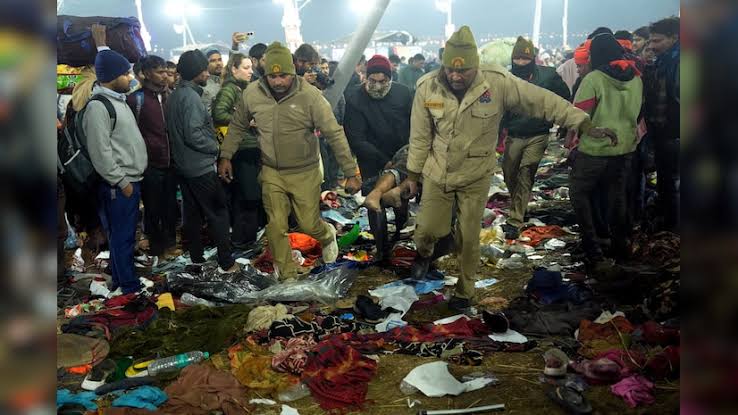
“I had my mother’s hand in mine,” recalled Anil Tiwari, a 42-year-old pilgrim from Varanasi, his voice shaking. “The moment the crowd pushed forward, she lost her footing. I tried to pull her up, but people kept falling over us. I lost her in the chaos.”
The Rapid Action Force and local police rushed to contain the situation, but by then, the damage had been done. At least seven people lost their lives, while dozens suffered injuries ranging from minor bruises to critical fractures. The exact toll is still being assessed.
Government Response and Rescue Efforts
The Uttar Pradesh government swiftly deployed emergency response teams, and ambulances ferried the injured to nearby hospitals. Prime Minister Narendra Modi expressed deep sorrow over the tragedy, assuring that all possible assistance would be provided to the affected families.
“We are committed to ensuring the safety of our pilgrims. An investigation is underway to determine what led to this unfortunate incident,” said Chief Minister Yogi Adityanath.
Despite the quick response, the stampede has raised serious concerns over crowd management at the Maha Kumbh, which is regarded as one of the largest religious gatherings in the world.
The Challenge of Managing a Mega Event
The Maha Kumbh Mela is held every 12 years, and the 2025 event was expected to attract over 400 million devotees over its six-week duration. On the day of the tragedy alone, nearly 100 million people were estimated to be present in Prayagraj.
While authorities had implemented various safety measures, including:
- Surveillance cameras to monitor crowd movement
- Deployment of thousands of security personnel
- Establishment of medical facilities and emergency response teams
The sheer scale of the gathering made absolute control impossible.
Crowd management experts argue that poor coordination, lack of proper exits, and the inability to regulate the flow of devotees contributed to the disaster. “Stampedes don’t happen because of large numbers alone,” said Dr. Rakesh Sharma, a disaster management specialist. “They happen when there is a sudden breakdown in movement control. That’s where planning needs to be more robust.”
A History of Stampedes at Kumbh Mela
Unfortunately, stampedes at the Kumbh Mela are not new.
- In 1954, a stampede in Allahabad led to the deaths of over 800 people, one of the worst tragedies in the event’s history.
- In 2013, another stampede at the Allahabad railway station killed 42 people and injured over 300.
- Multiple smaller incidents have occurred over the years, highlighting the urgent need for better crowd control strategies.
Survivors’ Accounts: Stories of Loss and Survival
Among the survivors was Sunita Devi, a 61-year-old woman from Bihar. She had traveled with her family for the holy dip, but in the confusion, she got separated. “I was pushed to the ground, and people kept stepping over me,” she recalled tearfully. “I thought I would die there. If not for a young man who pulled me up, I wouldn’t be alive today.”
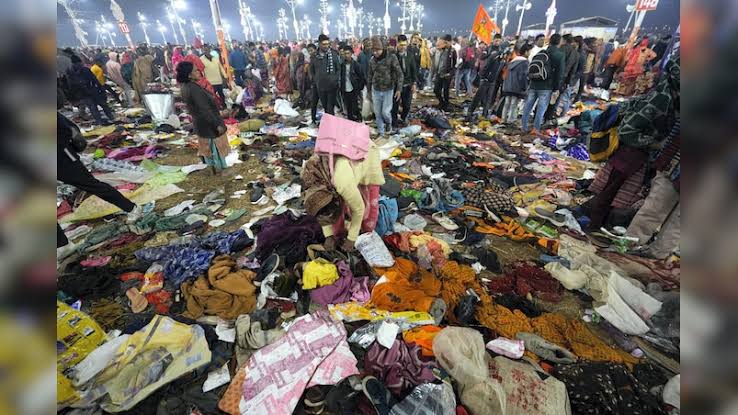
Others were not as fortunate. Rajesh Kumar, a father of three, lost his eight-year-old son in the chaos. “He was holding my hand, but in the rush, he slipped away,” he said, sobbing. “I searched for him everywhere, but by the time I found him, it was too late.”
Lessons to be Learned
The 2025 Maha Kumbh stampede is a tragic reminder of the challenges of handling mega-events in India. Experts suggest several ways to prevent such incidents in the future:
- Better crowd segmentation: Controlling the entry and exit points to ensure even distribution of devotees.
- Real-time crowd monitoring: Using AI-based surveillance to detect congestion before it turns dangerous.
- More emergency response teams: Ensuring that multiple medical units are stationed across key zones.
- Public awareness campaigns: Educating devotees on safety protocols, avoiding panic, and helping those who fall.
Moving Forward with Faith and Responsibility
The Maha Kumbh Mela remains a deeply spiritual event, a tradition that has endured for centuries. However, faith must be accompanied by responsibility—from both authorities and devotees.
For those who lost loved ones, no amount of official statements can undo their grief. For those who survived, the scars—both physical and emotional—will take time to heal. But as preparations continue for future events, ensuring that such tragedies do not repeat must be a top priority.
As the sun rises over the Sangam, thousands will still come to take their holy dip—because faith, even in the face of tragedy, remains unshaken. The only question is: Will we be better prepared next time?