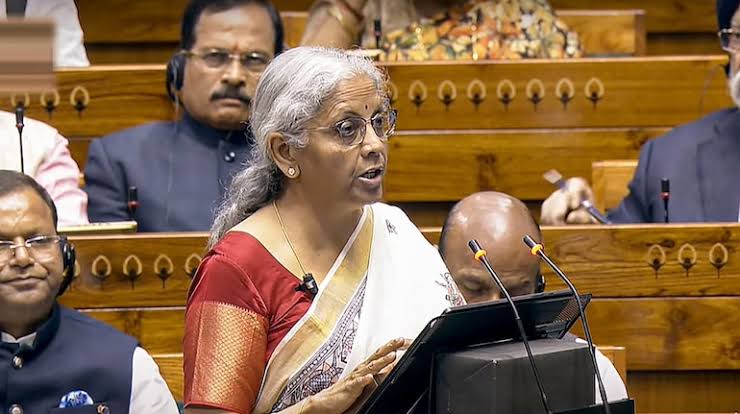
The Union Budget 2025 India, presented by Finance Minister Nirmala Sitharaman on February 1, 2025, outlines a comprehensive strategy to stimulate economic growth, enhance infrastructure, and support various sectors of the economy.
Key Highlights of the Union Budget 2025:
1. Personal Income Tax Reforms:
In a significant move to boost domestic demand, the government announced substantial reductions in personal income tax rates. The tax exemption threshold has been raised to ₹1.28 million (approximately $14,800), up from the previous ₹700,000. Additionally, tax rates for incomes above this threshold have been reduced. These changes aim to increase middle-class consumption, savings, and investment, despite an anticipated annual revenue loss of about ₹1 trillion ($11.6 billion).
2. Agricultural Initiatives:
The budget places a strong emphasis on agriculture, introducing a six-year program to boost the production of pulses and cotton. This initiative includes state agencies purchasing pulses at guaranteed prices to support farmers and reduce reliance on imports. For cotton, particularly extra-long staple varieties, the government plans to enhance production through research and development efforts. These measures aim to strengthen the agricultural sector, which employs nearly 45% of India’s workforce and contributes about 15% to the economy.
3. Infrastructure and Capital Expenditure:
To drive long-term economic growth, the government has significantly increased capital expenditure, focusing on infrastructure projects such as roads, water supply systems, metro systems, railways, defense, digital infrastructure, and green technologies. The capital expenditure allocation for FY26 is anticipated to range between ₹11 trillion and ₹11.5 trillion, reflecting a 15-17% increase compared to the revised spending for FY25. This investment is expected to create jobs and support investment-driven growth.
4. Fiscal Deficit and Borrowing:
The government has set a fiscal deficit target of 4.4% of GDP for the fiscal year 2025-26, down from a revised 4.8% for the current year. To fund the deficit, gross market borrowing is projected to increase to ₹14.82 trillion, while net market borrowing is expected to slightly decrease to ₹11.54 trillion. The government also aims to reduce the debt-to-GDP ratio to 50% by March 2031 from the current 57.1%, aligning with global fiscal policy trends towards more flexible fiscal standards.
5. Support for the Gig Economy and Startups:
Recognizing the growing gig economy, the budget includes measures to formalize gig workers, improving their access to healthcare and welfare initiatives. Additionally, investments will be directed towards startups and innovation, fostering entrepreneurship and technological advancement.
6. Energy Sector Initiatives:
A notable highlight is the introduction of a Nuclear Energy Mission, aiming to achieve 100 GW of nuclear power by 2047. This initiative underscores the government’s commitment to diversifying energy sources and promoting sustainable development.
7. Corporate Sector Impact:
The budget’s focus on increasing disposable income through tax exemptions is expected to boost consumption, benefiting sectors such as fast-moving consumer goods (FMCG) and automotive industries. However, the insurance sector may face challenges as higher tax slabs could reduce the attractiveness of tax-saving insurance products.
8. Social Welfare and Subsidies:
The government has allocated ₹4.57 trillion for food, fertilizer, and rural employment subsidies in the next financial year, maintaining the current level of support. The budget for the flagship rural job guarantee program remains at ₹860 billion, while the fertilizer subsidy is slightly reduced to ₹1.67 trillion. The food subsidy allocation has been slightly increased to ₹2.03 trillion. These allocations aim to support the rural economy and provide a safety net for vulnerable populations.
9. Infrastructure Development:
The budget emphasizes the development of urban transportation, with significant investments in metro expansions and regional connectivity rail projects. India now boasts the third-largest metro network globally, and further expansions are planned to enhance urban mobility, reduce traffic congestion, and promote sustainability. Additionally, high allocations are expected for high-speed rail corridors, semi-high-speed train networks, advanced freight logistics, and enhanced passenger experiences. These initiatives are vital for decongesting urban spaces and reducing emissions.